
9th Symposium Cohort. Credit: Heidi Turner
By Gilbert C. Correa, World Heritage Nominations Initiative Director
This past March (09 – 12 2026), the heart of the borderlands beat a little stronger as Ajo, Arizona, hosted the 9th installment of the Tri-National Sonoran Desert Symposium. Organized by the International Sonoran Desert Alliance (ISDA), this biennial gathering brought together members of the Tohono O’odham Nation, Mexico and the United States to celebrate, protect and understand the unique natural and cultural treasures of the Sonoran Desert.
Held at the historic Curley School campus and the Sonoran Desert Inn & Conference Center, the event served as a vital bridge between scientists, community members, artists and historians, highlighting that while the border divides land, it unites people in a shared ecosystem.
A Gathering Rooted in Place
The four-day symposium was packed with activities designed to deepen connections to the border region.
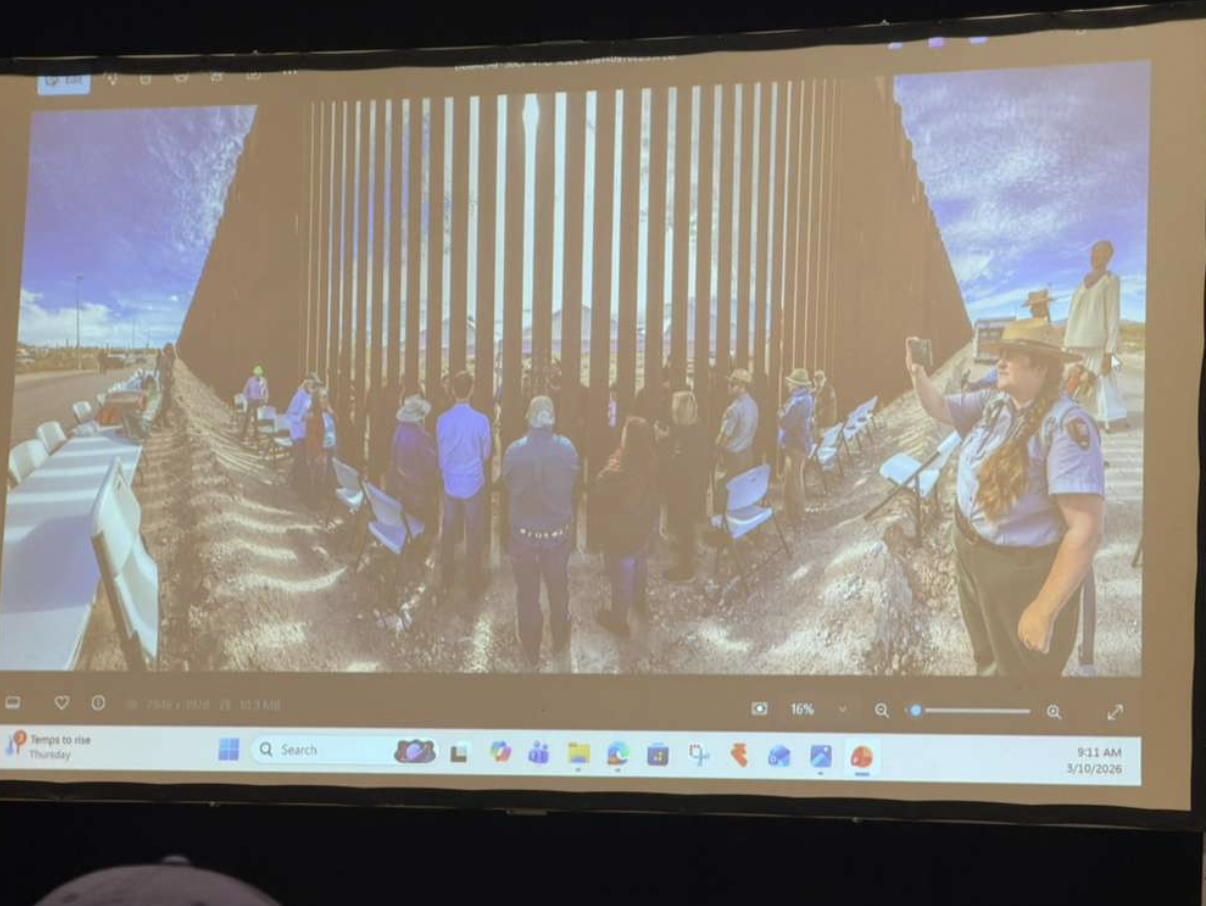
Photo of folk standing by the Wall holding hands in solidarity with counterparts in Mexico. Credit: Gilbert C. Correa.
Cultural Connections and Community Art
A particularly moving aspect of the 9th Symposium was the focus on cultural endurance. Women from the Seri (Comcáac) Tribe attended, sharing traditional children’s songs and perspectives on sustaining cultural traditions connected to the Sonoran Desert and the Sea of Cortez.
Federico Godinez, Retired Director of El Pinacate y Gran Desierto de Altar UNESCO Biosphere Reserve and World Heritage Site (Mexico: 2013), co-presented with me on preserving this arid jewel and expanding the inscription to include Organ Pipe Cactus National Monument and Cabeza Prieta National Wildlife Refuge as well as exploring the possibility of pursuing a mixed site designation.
The event also highlighted community art, including a show by the HimdagKi collective and Tmakig Collective, alongside the screening of Beyond Borders, a documentary showcasing a community arts project by ISDA.
Environmental Challenges and Scientific Dialogue
The symposium isn’t just a celebration; it’s a working conference aimed at solving environmental challenges. Key sessions included: Updates on endangered native fish in the Sonoyta River by Dr. Alejandro Varela-Romero. Discussions on cross-border habitat connectivity. Presentations regarding the impacts of climate and infrastructure on the borderlands’ fragile ecosystems.
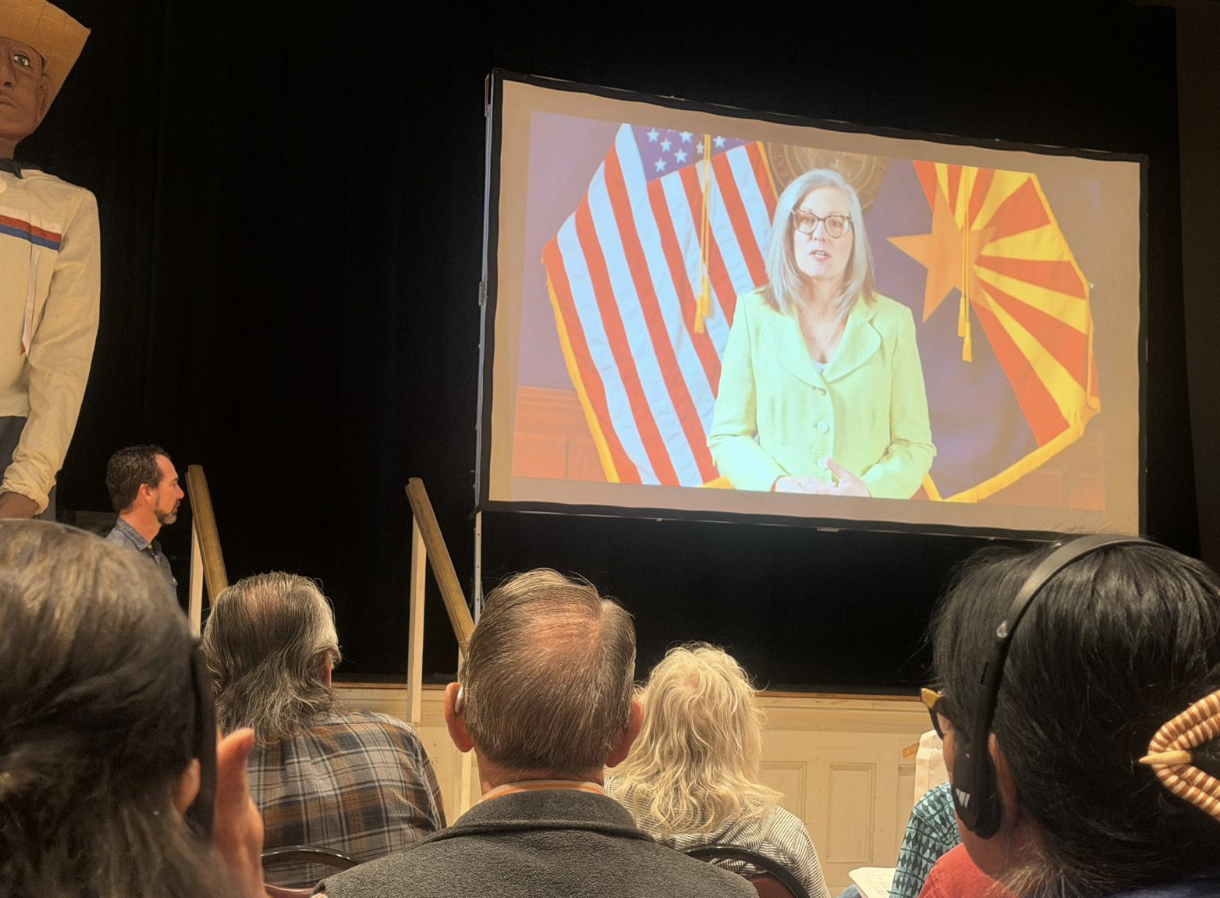
Governor Katie Hobbs gave an address to the symposium expressing support. Photo Credit: Gilbert C. Correa.
Keynote speakers
Renowned experts and historians, including Dr. David Yetman, set the stage for deep discussions on desert ecology and history. The 9th Symposium featured a wide array of voices, from poetry by @dirtyverbs and @peccary_not_pig to plenary panels on Tohono O’odham history.
Field trips
Attendees explored the region firsthand, with highlights including visits to the Schuk Toak Museum in Sonora, Mexico—a stunning facility located at the interface of the Pinacate volcanic field and the Gran Desierto de Altar sand dunes. Raquel Montez, Superintendent, and Oliver Goodman, Deputy Chief of Interpretation, kindly gave Federico Godinez and I a tour of the Border Wall and A’al Vaipia (Quitobaquito) at Organ Pipe Cactus National Monument.
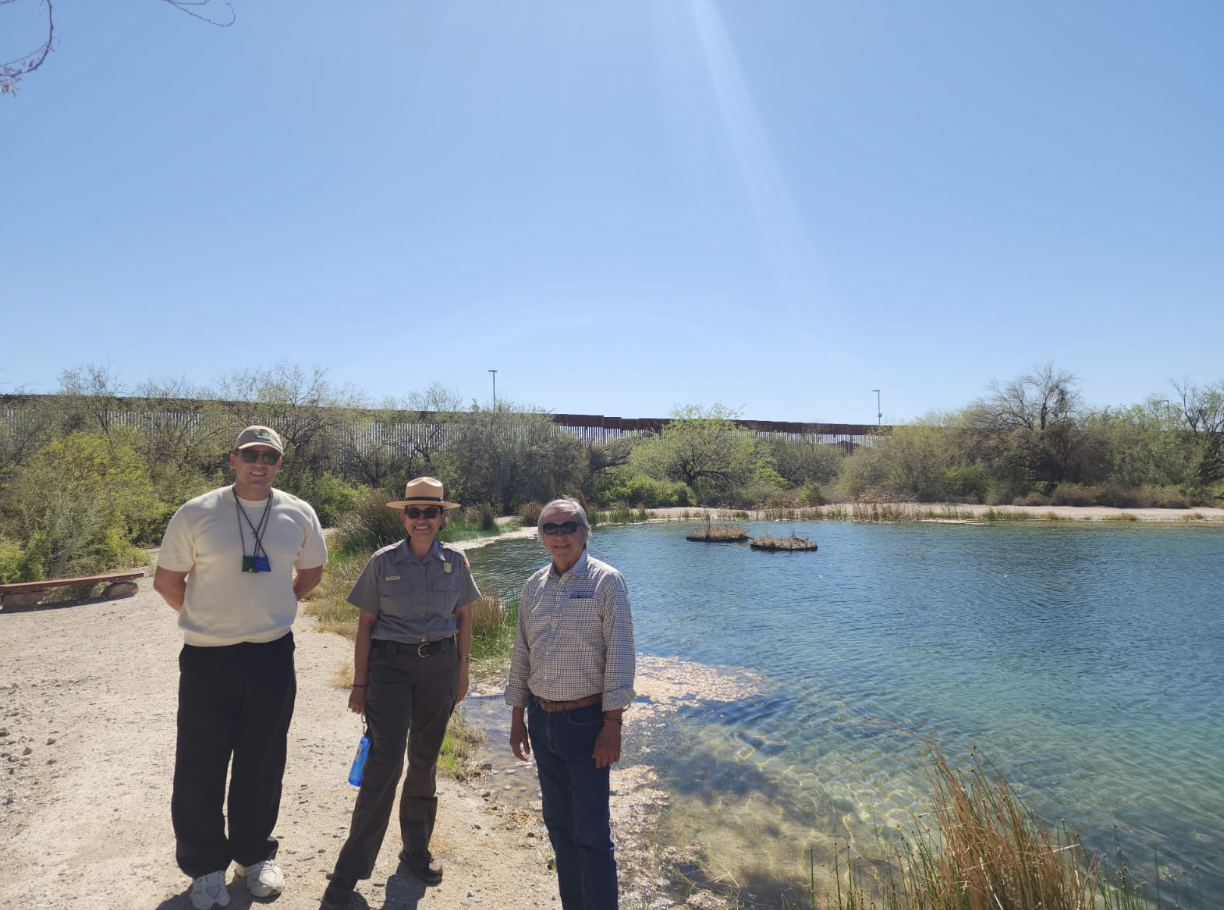
(Left to right) Gilbert C. Correa, Raquel Montez and Federico Godinez Leal. Photo credit: Federico Godinez Leal.
Looking Forward
The 9th Tri-National Sonoran Desert Symposium reaffirmed that the Sonoran Desert is not just a place on a map, but a living, breathing community that requires intentional stewardship and collaboration.
“In the early light of the desert, every shadow, songbird and saguaro carries a story,” noted the organizers. This symposium ensured those stories continue to be told across borders.