
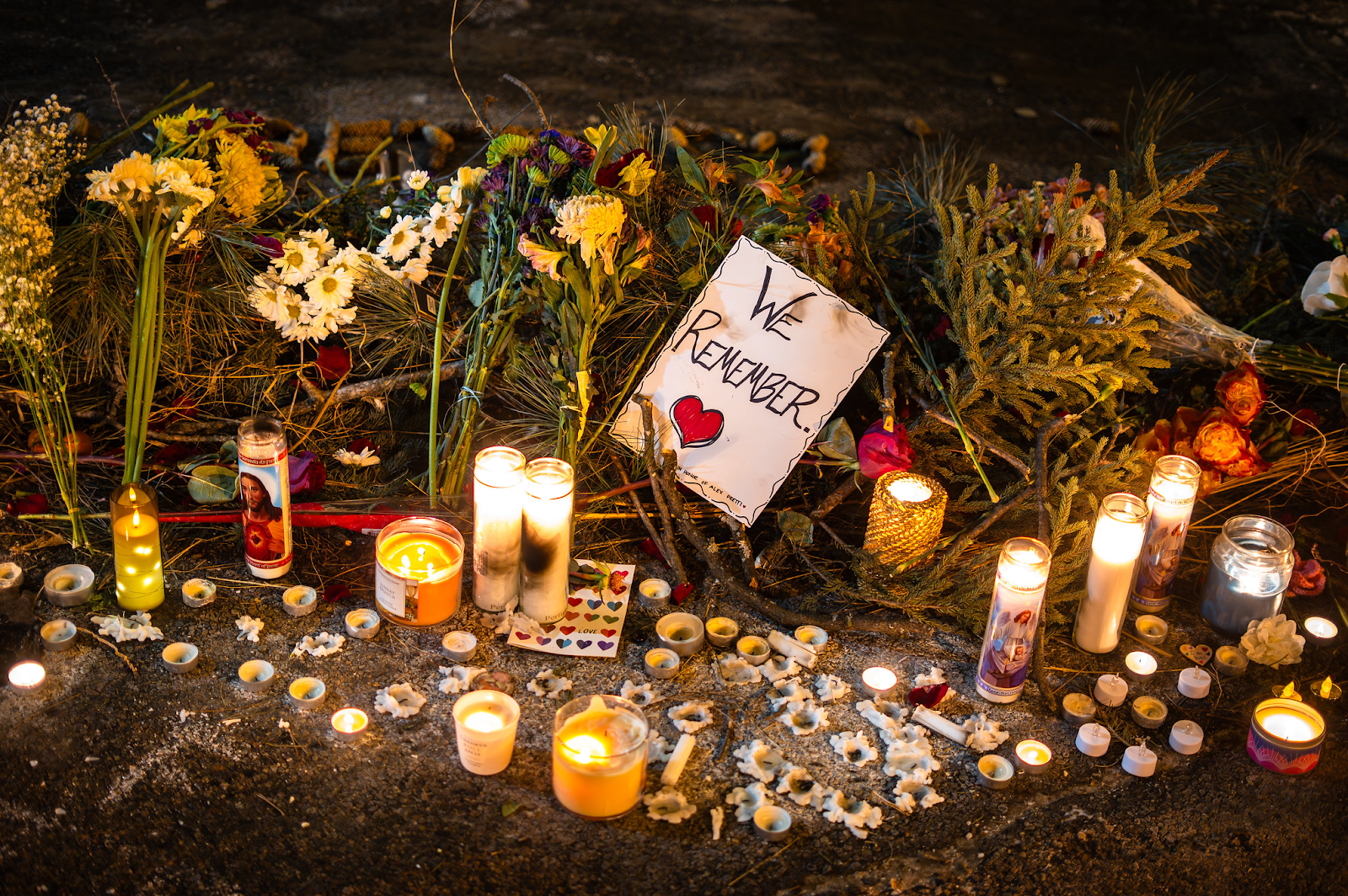
Cover Image Credit: Chad Davis
By Madeline Bonner, Monuments Toolkit
“Say Their Name.”
At a picket outside of an Immigrations and Customs Law Enforcement (ICE) office in Centennial, Colorado, on January 11th, 2026, protestors engaged in a series of call and response chants.
The call: “Say their name.”
The responses: “Renee Nicole Good” and “Silverio Villegas González.”
The demand is that the names be said out loud, amplified through repetition, and carried by crowds. By doing so, it makes it harder for their lives and deaths to be suppressed. The call to “say their names” is often used in remembrance of victims of law enforcement brutality.It aims to ensure that individuals in positions of power who commit violence are not able to hide behind systems that are sanctioned by the state. Instead, they must answer for their actions and to people who refuse to let the names of their loved ones be buried.
Renee Good’s name echoes through the streets of Minneapolis, Minnesota, as the name George Floyd did during protests following his murder in the summer of 2020. George Floyd was killed by Minneapolis police officer Derek Chauvin on May 25, 2020. Renee Good was killed by ICE officer Johnathon Ross in Minneapolis on January 7, 2025. Both murders acted as a catalyst for the mobilization of people to protest the violence and abuse of power perpetrated by law enforcement. The power of the people demands accountability from a powerful system.
On January 13th, 2026, six federal prosecutors in Minnesota resigned in protest to the Justice Department’s “reluctance” to investigate the actions of Renee Good’s murderer, Johnathon Ross. Instead, it was reported that the Department of Justice (DOJ) sought the investigation of Good’s widow due to her alleged association with activist groups in opposition to ICE. According to this evidence, it appears that the DOJ seeks to bring no consequences to ICE officer Johnathon Ross for the killing of Renee Good. This is an example of how violent offenders hide behind powerful state sanctioned systems.
On the day of Renee Good’s murder, Minneapolis Mayor Jacob Frey said: “ICE — Get the f*** out of Minneapolis. We do not want you here. Your stated purpose for being in this City is to create some kind of safety, but you are doing exactly the opposite.” In a news conference later that day, Department of Homeland Security (DHS) Secretary Kristi Noem repeatedly defended the actions of ICE agent Johnathon Ross.
“Rest in power.”
It is hard to ascertain the details of many incidents of violence by ICE officers. The federal government has been known to share information that directly contradicts eye witness reports and video evidence when it is available. Community networks serve the function of keeping people informed on knowledge that is not presented to the public by news outlets or the federal government.
Often, victims of law enforcement violence who are people of color receive less attention from news and media outlets than white victims. The tragic death of Renee Good, who recognized and exercised her privilege as a white woman to help protect her neighbors, was amplified nationally in a way previous deaths at the hands of ICE had not been and will not be. Despite the bias at its base, the amplification serves an important purpose. It uses the power of such flawed information systems to reach people and grow the fight against reckless and unchecked ICE violence.
People across the nation have gathered to create memorials in honor of individuals who have been killed by ICE officers. Some spaces center a particular name and life while others honor all victims of ICE violence. The following are examples of memorials and vigils created to honor four people who were fatally shot by ICE agents in the last 6 months.
Renee Nicole Macklin Good
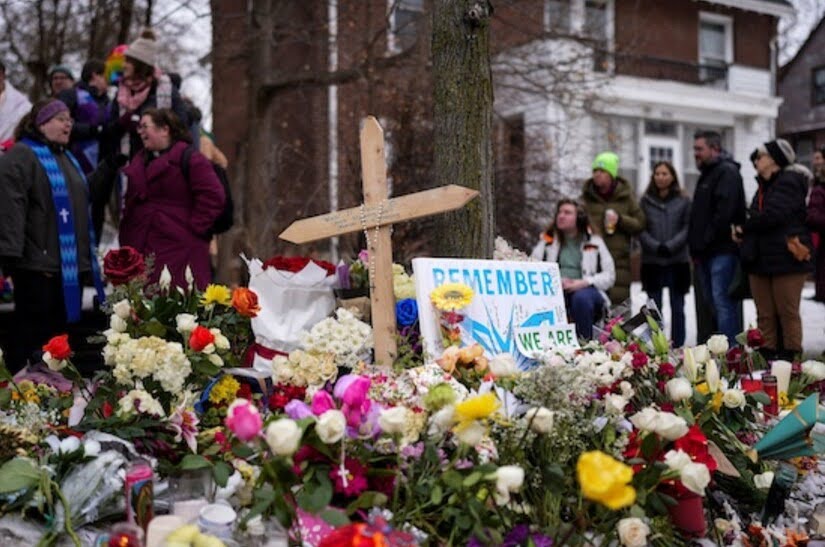
Renee Good was a 37-year-old mother of three, poet, writer, and singer from Colorado. On January 7, 2026, she was fatally shot in Minneapolis, Minnesota, by ICE agent Jonathan Ross. In a statement, Becca Good described her wife: “Renee lived by an overarching belief: there is kindness in the world and we need to do everything we can to find it where it resides and nurture it where it needs to grow.” The Goods are a family that advocates for the rights of their neighbors. Becca Good stated: “On Wednesday, January 7th, we stopped to support our neighbors. We had whistles. They had guns.”
There has been a memorial for Renee Good established in Minneapolis with flowers, candles, and signs at the corner of Portland Avenue & 33rd/34th street, near where Renee was killed. Community vigils for Renee Good have been held across the country in Seattle, WA, Chicago, IL, Tallahassee, FL, Houston, TX, Portland, ME, Tucson, AZ, Philadelphia, PA, Whitefish, Montana, Baltimore, MD, and beyond. People are demanding an investigation of Renee Good’s murder, as official statements from DHS contradict eye witness accounts and video evidence.
Silverio Villegas González
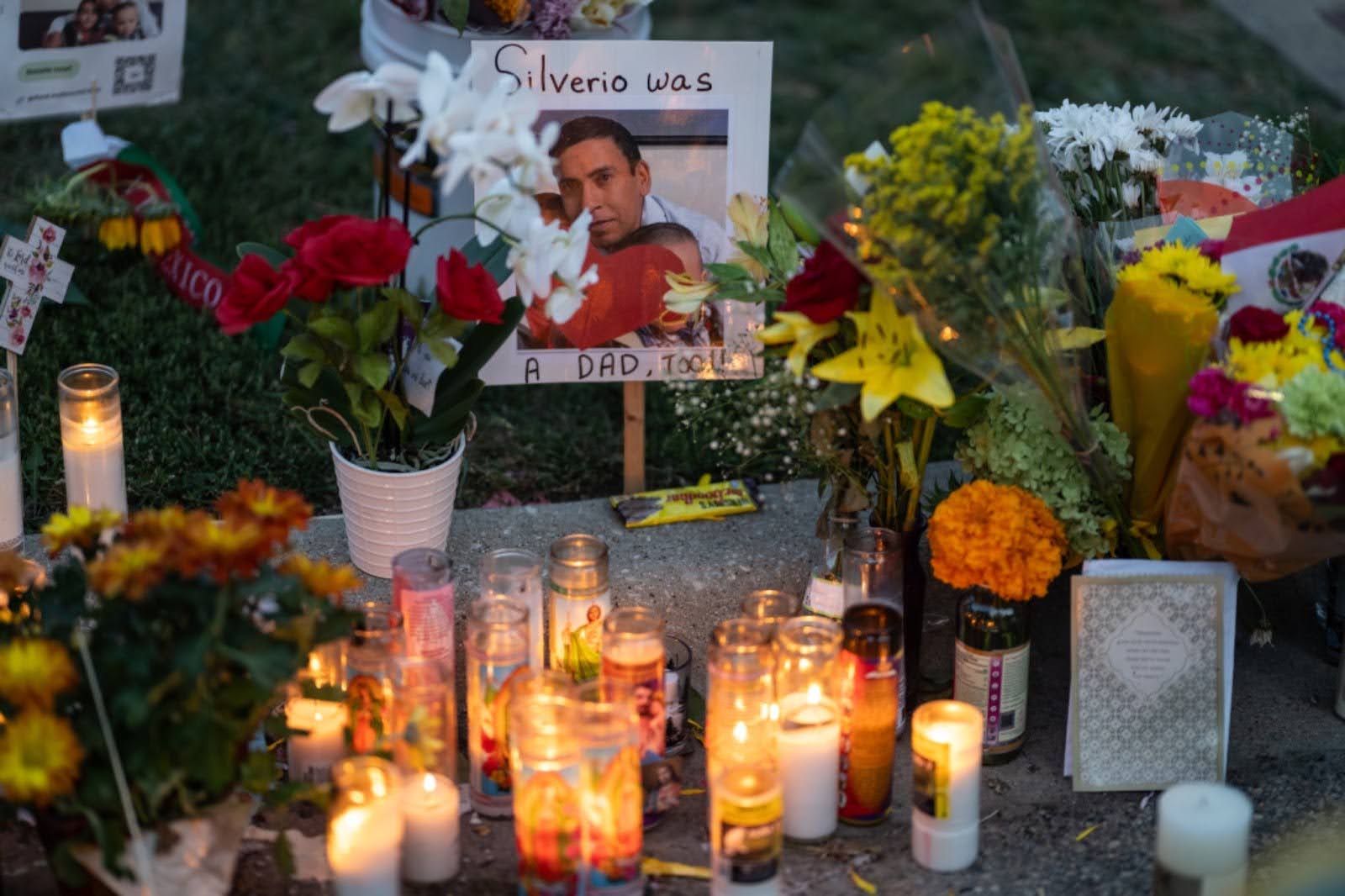
Silverio Villegas González was a 38-year-old father of two from Michoacán, Mexico. On September 12, 2025, he was fatally shot in Franklin Park, Illinois, by an ICE agent. Villegas González’s girlfriend spoke of him as a “very kind, gentle person.”
Silverio Villegas González was honored at a memorial service at First United Methodist Church in Franklin Park, IL. The memorial service included songs, prayers, and remarks from community members and church leaders before a candlelight march was led to the site of his death. A beautiful ofrenda (altar) was also created to honor his life at a Dia De Los Muertos celebration in Franklin Park on November 1, 2025. Silverio Villegas González’s name has also been echoed alongside Renee Good’s at vigils and demonstrations against ICE violence across the nation.
Illinois Governor J.B. Pritzker has called for a full account of Mr. Villegas González’s murder as well as transparency from ICE and DHS. Official statements from federal agencies contradict eye witness accounts.
Keith Porter Jr.
For images and videos from the community vigil held to honor Keith Porter Jr, please see this post.
Keith Porter Jr. was a 43-year-old father of two, brother, and nephew from Carson, California. On December 31, 2025, he was fatally shot by an off-duty ICE agent Brian Palacios in Northridge, California. “He was a light in our family and he was a light for everyone that came [to] encounter with him,” according to Jsane Tyler, Porter’s cousin.
On January 10, 2026, a vigil sponsored by Keith Porter Jr.’s family was held in Carson Park, California. There were candles, flowers, and balloons at the gathering to honor his life. Several additional memorials and vigils have been created in the Northridge and Carson area. Keith Porter Jr. is also honored at nationwide marches and vigils alongside Silverio Villegas González and Renee Good.
Keith Porter Jr.’s family is preparing a lawsuit against the federal government and calling for an arrest of his killer. They came before the LA Police Commission to demand that LAPD treat the case as a criminal investigation. Official statements from DHS contradict accounts of Keith Porter Jr.’s family and community members.
Alex Pretti
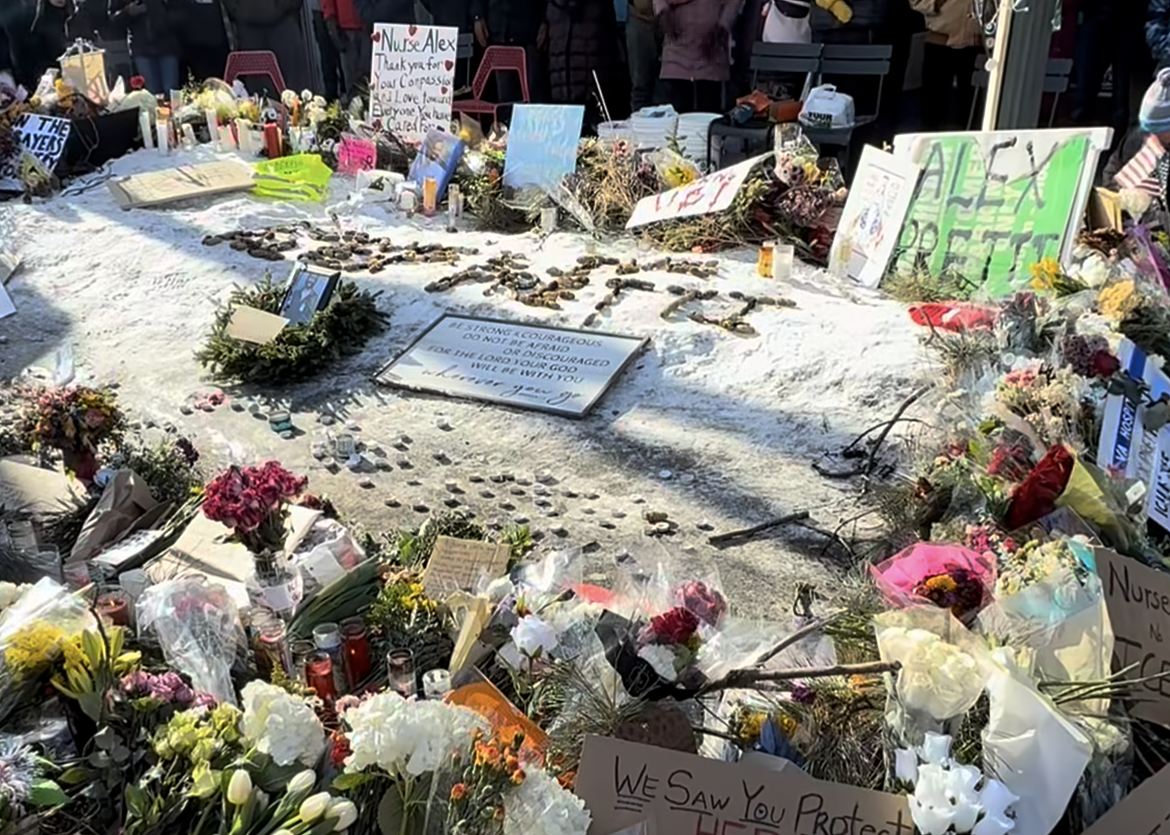
Alex Pretti was a 37-year-old son, nurse, and Minneapolis resident from Illinois. On January 24, 2026, Alex Pretti was fatally shot in Minneapolis, Minnesota, by an ICE agent. In a statement, Alex Pretti’s parents said: “Alex was a kindhearted soul who cared deeply for his family and friends and also the American veterans whom he cared for as an ICU nurse at the Minneapolis VA hospital. Alex wanted to make a difference in this world. Unfortunately he will not be with us to see the impact.”
A memorial of candles, flowers, and signs was started at the site of his murder. Alex Pretti is also honored at nationwide marches and vigils alongside Silverio Villegas González, Keith Porter Jr., and Renee Good.
National Public Radio (NPR) reports that Mr. Pretti’s murder sparked “strong bipartisan condemnation” with a number of congressional leaders calling for an investigation of the shooting. The NRA has also made a statement regarding the shooting. Official statements from DHS contradict video evidence and eye witness accounts.
ICE Enforcement since January 20, 2025
In collaboration with DHS Secretary Kristi Noem and acting Director of ICE Todd Lyon, Mr. Trump has enforced a chaotic and unchecked immigration enforcement strategy. Under the president’s direction, “Trump’s DHS appointees swiftly dismantled civil rights guardrails, encouraged agents to wear masks, threatened groups and state governments that stood in their way, and then made so many arrests that the influx overwhelmed lawyers trying to defend immigrants taken out of state or out of the country” (McSwane and Allam 2025). In an effort to quickly hire ICE agents after receiving billions of dollars of additional funding, agency standards for age, training, and education were lowered and recruits were offered a $50,000 sign on bonus. ICE agents approach people to question their immigration status based on the languages they speak, the color of their skin, their accent, and/or information that they have received from various public and private sources. It has been reported that ICE agents have also forced their way into residences to conduct searches without a warrant.
The enforcement effort is based heavily on racial profiling. On September 8, 2025, the Supreme Court of the United States issued a ruling that permits federal agents to stop individuals based on “(i) presence at particular locations such as bus stops, car washes, day laborer pickup sites, agricultural sites, and the like; (ii) the type of work one does; (iii) speaking Spanish or speaking English with an accent; and (iv) apparent race or ethnicity” 606 U. S. 3 (2025). In this case, Kristi Noem, on behalf of DHS, advocated for ICE’s right to racially profile people in America, and the Supreme Court granted it. This case makes it clear that, though ICE efforts under the Trump administration target many communities, Latine communities are being disproportionately targeted.
The aggression at the foundation of ICE’s immigration enforcement strategy is bolstered by inflammatory and false rhetoric from Mr. Trump. He regularly refers to immigrants as “criminals,” though of the 68,400 people in ICE detention in December 2025, about 75% had no criminal convictions. It is worth noting that Mr. Trump himself has been criminally convicted. An example of the president’s racist rhetoric is Mr. Trump’s reference to Somali Americans as “garbage.” American residents, including U.S. citizens, are being targeted by ICE agents based on their race.
The Trump administration’s immigration enforcement strategy has received pushback from several state and local leaders in places such as Los Angeles, Chicago, and Minneapolis. The Trump administration has responded with threats to withhold federal funding and the introduction of additional federal agents to “sanctuary cities.”
Without sufficient oversight, Americans are relying on each other to remain safe. Community networks have been created to share information, report ICE agent sightings, and identify vehicles associated with ICE. In some cases, ICE officers are conducting business in unmarked vans in plain clothes without identifying themselves. Their seemingly unchecked use of force has been questioned by victims, activists, immigrant rights organizations, reporters, elected officials, and scholars.
Jamie Alanís and Roberto Carlos Montoya Valdez both died fleeing ICE operations.
Jamie Alanís was a 57-year-old father and uncle who supported his wife and daughter residing in Mexico. Mr. Alanis died in the hospital on July 12, 2025, after he fell 30 feet from the roof of a greenhouse while fleeing an ICE raid. According to his niece, “he was loved by his community.” The family of Jamie Alanis has filed a notice of claim with ICE raising concerns that “excessive force used by ICE agents contributed to Mr. Alanis’s fall and ultimate death,” according to a press release from their attorney’s office. A public vigil and rosary service was held in honor of his life.
Roberto Carlos Montoya Valdez was a 52-year-old father and brother from Jutiapa, Guatemala. He died from injuries he sustained by being hit by a car while fleeing an ICE raid at a Home Depot in southern California. California Assemblymember John Harabedian said the ICE operation was “frightening and chaotic,” adding: “Raids like this do not make our streets safer – they terrorize families, instill fear, and put lives at risk.” A memorial was established near where he was killed.
32 people died in ICE custody in 2025, a record high since the same number of deaths in 2004. There have been reports of medical neglect, unsanitary conditions, and physical and sexual abuse at numerous ICE detention facilities. One example is Camp East Montana at the Fort Bliss military base in El Paso, Texas. Congresswoman Veronica Escobar sent a letter first in September 2025 and again in November later that year to DHS Secretary Kristi Noem demanding that ICE and DHS respond to reports of inadequate medical care, poor food and water quality, and sewage backups at Camp East Montana. On December 8, 2025, the American Civil Liberties Union (ACLU) sent a letter to acting director of ICE, Todd Lyons, and others based on 45 interviews with people detained at Camp East Montana raising concerns about a range of abuses being committed against people in custody. The dire conditions at Camp East Montana are not exceptional. It is just one of the places that has been able to be accessed and witnessed. A May 2025 report, submitted to the United Nations and Inter-American Commission on Human Rights by a coalition of fifteen immigrants’ rights organizations, outlines the “[Trump] administration’s unprecedented assault on due process and human rights.”
ICE has existed as an agency since 2003. Immigration enforcement and abuse by ICE has occurred under every presidential administration since George W. Bush. However, the level of violence has reached a new height under the Trump administration as systems of oversight have been dismantled and the budget for anti-immigration work has increased by billions of dollars.
As mentioned, though ICE efforts under the Trump administration target many communities, Latine communities are being disproportionately targeted. State sanctioned violence against Latine communities has occurred throughout time. There are events, systems, and structures that demonstrate this. In “It’s Long Past Time We Recognized All the Latinos Killed at the Hands of Police,” author Julissa Arce argues that “the specific agencies may have changed over the years, but racist attitudes and action in law enforcement have persisted.” Arce refers to a horrific event that occurred over 100 years ago, the 1918 Porvenir Massacre, to demonstrate the continuity of violence. Historical events show a pattern of state sanctioned violence against many communities of color that is rooted in racism. Without help from congress or the courts, unchecked systems of violence led by the government can only be held accountable by the people.
Remembering, Unofficially
The process of erecting an official monument on public land often takes several years and numerous bureaucratic steps. Unofficial monuments and memorials are created by people in response to breaking news. These monuments might be ephemeral, but they are no less significant. An official monument may stand to commemorate the death of people at a historic event that occurred at that place 100 years ago. Unofficial monuments, such as the memorials created for victims of ICE violence, may commemorate the death of someone at that place today, yesterday, or last month. Both official and unofficial monuments are important for shaping collective memory. Place must be marked so the past, however recent, is remembered.
Resources
If you seek resources, consider consulting and sharing some of the links listed below.
- Immigrant Legal Resource Center – Know Your Rights When Confronted by ICE (Flyer)
- National Immigrant Justice Center – Know Your Rights: If You Encounter ICE
- Immigrant Defense Project – Know your rights with ICE
- Native American Rights Fund – Resources for Individuals and Nonprofits Approached by ICE
- Stop AAPI Hate – Know Your Rights: What to do if ICE Stops You or Comes To Your Home
- American Civil Liberties Union – Protestors’ Rights