

Credit: AP Photo/Evan Vucci/AP Photo/Evan Vucci.
Trump signs Executive Order 14199 withdrawing the U.S. from UN subsidiaries.
By Gilbert C. Correa, World Heritage Nominations Initiative Director
The United States intends to exit UNESCO in effect 31 December 2026, which is causing concern among World Heritage stakeholders, including architects, archaeologists and Indigenous leaders. But what would motivate the U.S. to withdraw again when having sites listed as World Heritage boosts tourism, protection, and economic development, among other benefits? Tammy Bruce, Radio Host and former Spokesperson for the United States Department of State pointed out conflicts between UNESCO’s ideologies and the administration’s “America First” policy, especially regarding UNESCO’s recognition of Palestine (Martinez-Smiley 2025).
Despite this decision, independent actors and organizers at the regional level are mobilizing and working towards propelling the inscription of two major nominations.
EL CAMINO REAL DE TIERRA ADENTRO
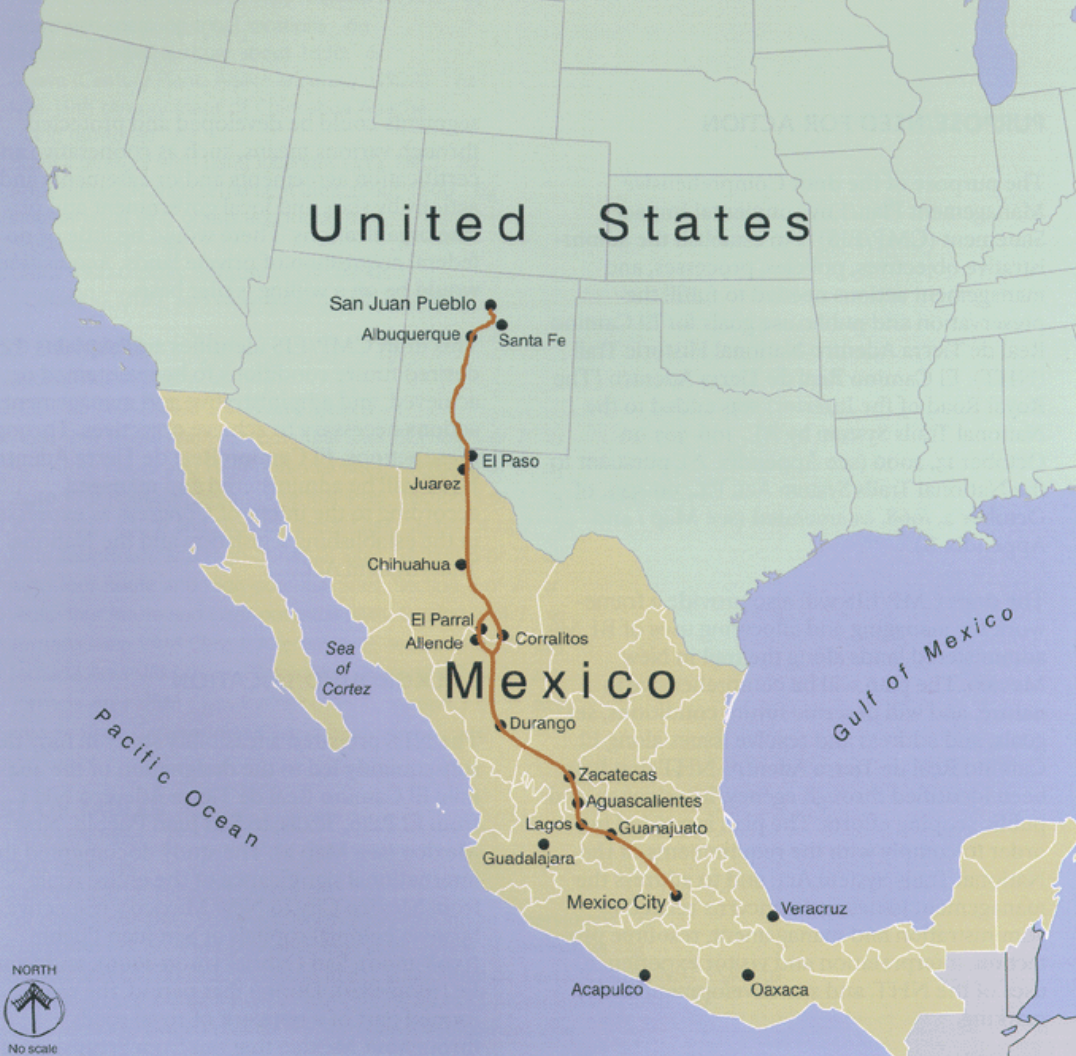
Map of El Camino Real de Tierra Adentro. Credit: NPS.
The nomination, which has been pursued binationally between the U.S. and Mexico since 2009, is on a fast track to be completed before the end of 2026. The Task Force for this nomination is collaborating closely with Mexico’s National Institute of Anthropology and History (Spanish acronym: INAH) to prepare all the nomination documents for formal inscription. Additionally, the Task Force is working closely with the U.S. Department of the Interior’s Office of International Affairs to position the site in the U.S. Tentative List and to formalize a partnership with Mexico. This significant cultural route will be nominated as an extension to Mexico’s 2010 World Heritage Inscription. According to UNESCO, an extension involves a country proposing additions to a site that is already inscribed. This necessitates that sites are initially included on the Tentative List and that the intricate procedures of UNESCO, involving particular forms and due dates, are adhered to.
SERPENT MOUND STATE MEMORIAL
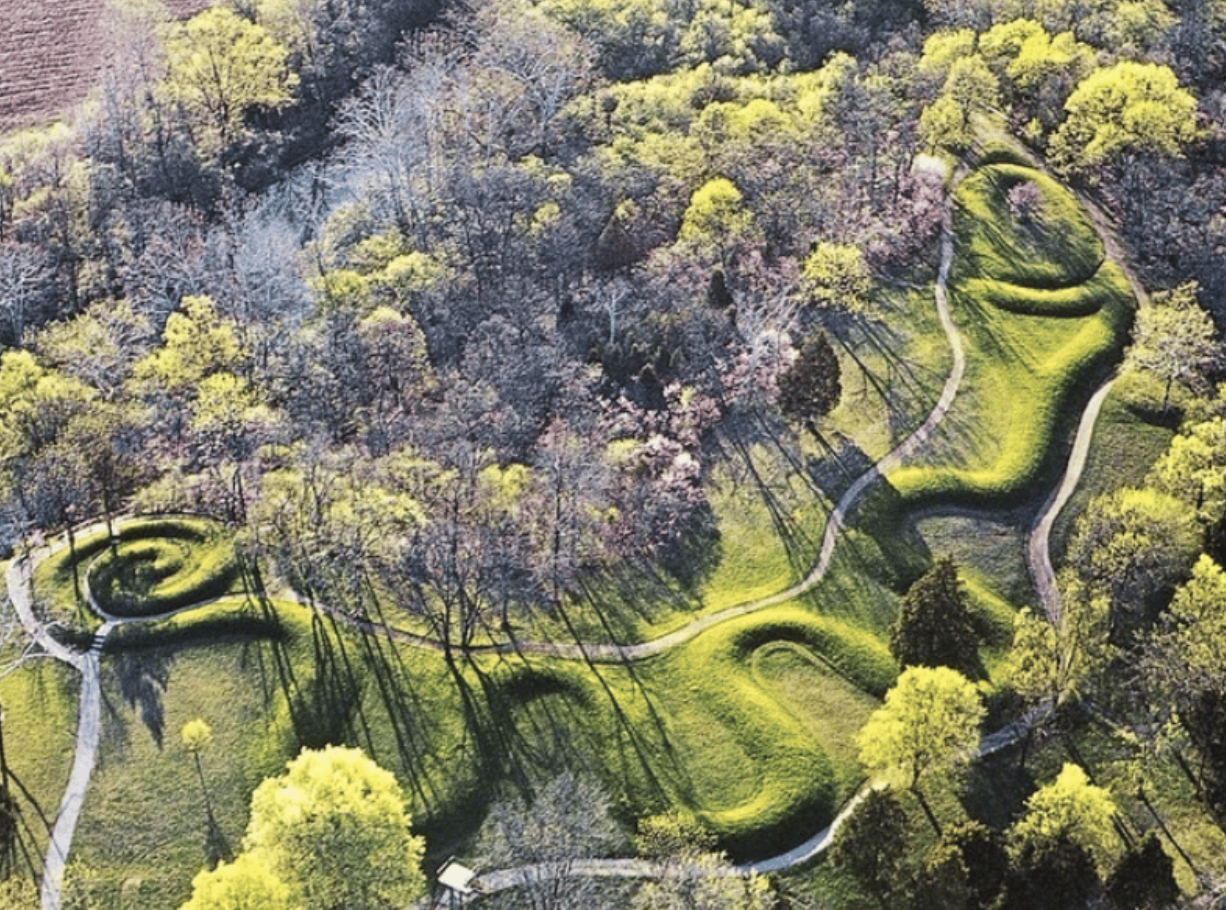
Aerial view of the Serpent Mound State Memorial. Credit: Visitors Bureau of Highland County
Located in Peebles, Ohio, the Great Serpent Mound is a prehistoric effigy mound that measures 1,348 feet (411 m) in length and stands 4 feet high. It was constructed on the Serpent Mound crater plateau, which extends along the Ohio Brush Creek in Adams County, Ohio. The mound represents the largest known serpent effigy globally and currently in the U.S. Tentative List (2008). However, its journey toward this recognition encounters significant obstacles due to the U.S. withdrawal from UNESCO which delays its potential listing by several years despite the Serpent Mound’s vast international importance as an Indigenous cultural landscape. Built around 1100 CE, Serpent Mound is historically distinct and requires its own nomination, rather than being included with the Hopewell Ceremonial Earthworks (inscribed in 2023).
With the U.S. planning to exit UNESCO in December, stakeholders remain hopeful that their nominations will carry on before the end of 2026.
Works Cited
- Martinez-Smiley, Adriana (2025). “As U.S. plans to exit UNESCO, Ohio earthwork may see years of delay in World Heritage nomination.” Accessed 03 January 2026.