By Madeline Bonner, Monuments Toolkit
Reflecting on Saving Places
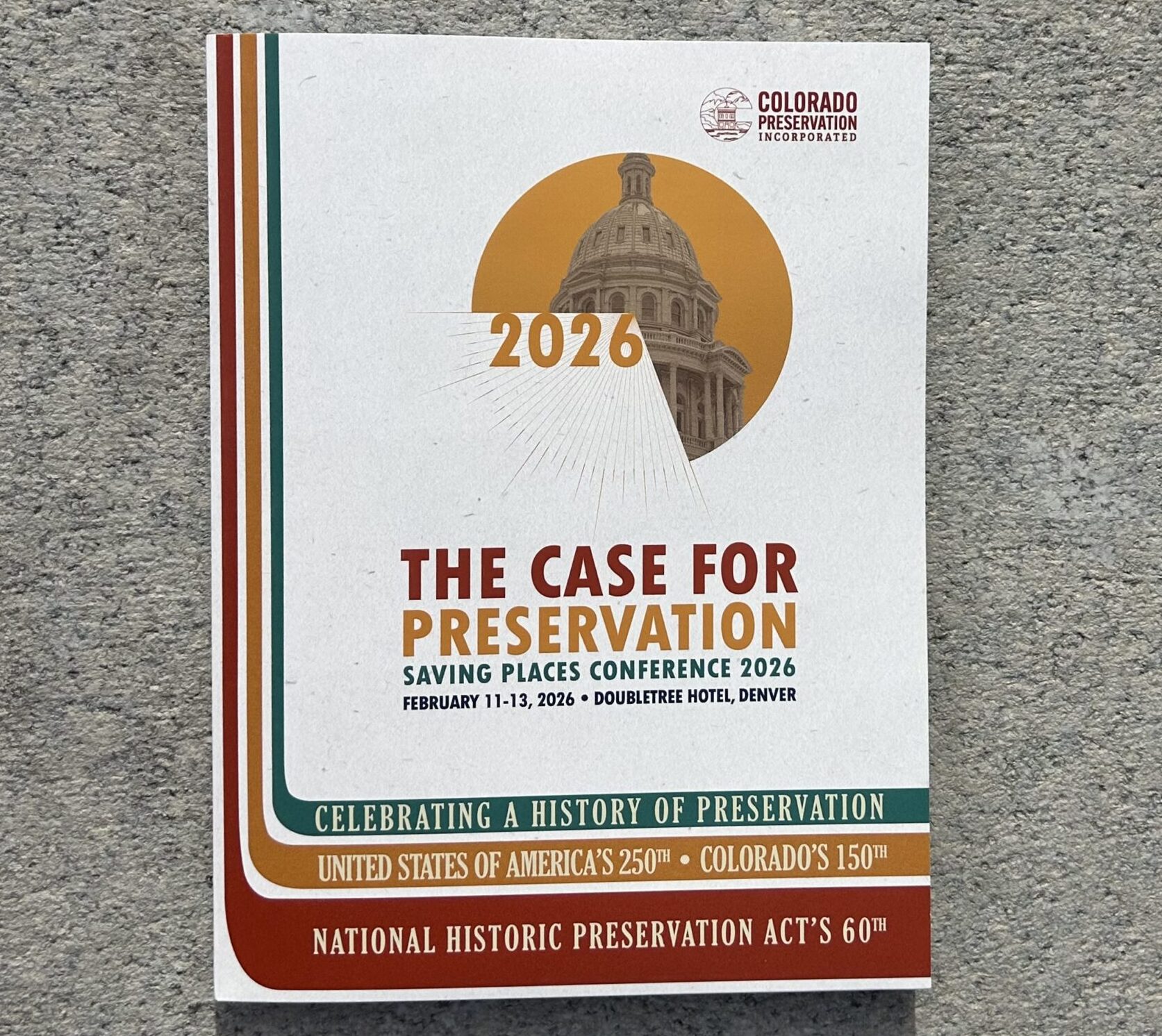
Last week, I attended the Saving Places Conference hosted by Colorado Preservation Inc. (CPI). CPI is a non-profit organization that was founded in 1984 with the goal of preserving and protecting historic places in the state of Colorado. The Saving Places Conference is held annually to connect and educate those working in and around the historic preservation field.
Many concepts resonated deeply with me as an anthropologist working in the heritage sector. For instance, as CPI Executive Director Jennifer Orrigo Charles and CPI Board Chair Kathleen Corbett stated, that “preservation today must be inclusive, forward-looking, and rooted in community needs.” I’ll use this statement as a framework to share a bit about what I learned at the Saving Places Conference based on the sessions I chose to attend.
Preservation Must be Forward-Looking
Those working in historic preservation must consider ways to move forward in the face of challenges related to funding, legislation, and workforce development.
Jeff Greene of EverGreene Architectural Arts discussed how traditional craft knowledge is being lost as the people with this cultural knowledge are aging out of the workforce and technological advances are being introduced. He argued that there needs to be an investment in engaging youth and emerging professionals to carry on the intangible heritage of craft.
Dr. Stephanie Toothman, Former Associate Director of Cultural Resources, Partnerships, and Science at the National Park Service, considered where the field has been in the 60 years since the National Historic Preservation Act and where it will go from here. She discussed her experience in seeking to tell all Americans’ stories in periods of support and resistance. Dr. Toothman suggested we keep up the pressure on our congressional representatives, keep telling our stories, keep documenting information, and keep communicating the significance of preservation work.
Speaking of keeping up the pressure on our congressional representatives, CPI facilitated a postcard-writing campaign. Conference attendees could write a postcard featuring a historic Colorado site to their legislators to be mailed by CPI at the end of the week. This area was a space created for those looking forward and taking action to advocate for historic preservation.
Preservation Must Be Rooted in Community Needs
Preservation work must be people-centered.
Jim Heid of Building Small spoke to the practice of broadening one’s idea of a “return on investment.” He argued this calculation must go beyond monetary profit and include how a project adds to a community, creates jobs, and brings soul or authenticity to a space. Mr. Heid shared how strategic adaptive reuse can add to the fabric of communities by creating infrastructure and economic growth.
Micheal de Lange, Senior Community Development Planner for the City of Seattle, discussed Seattle’s Disability Activism History Project. During the project, members of Seattle’s deaf and disability community expressed the desire to preserve sites of community infrastructure, community-driven activism, and everyday life. Ninety-four sites were identified in Seattle, and five are in the process of being nominated as landmarks. With the guidance of the community, city officials and consultants understood what places to advocate for the preservation of and why. Several conference sessions demonstrated that inclusive historic preservation practice is rooted in community.
Preservation Must Be Inclusive
Historic preservation efforts have always included decisions about whose history should be preserved. Today, we must reflect on those decisions and consider how we can build more equitable systems.
Sehila Mota Casper, Executive Director of Latinos in Heritage Conservation, argued that interpretation in historic preservation is never neutral, even if it may appear technical and objective. She spoke to the need to view the land “an archive in motion,” center oral histories and lived experiences as primary sources, and reckon with the implications of celebrating 250 years since 1776. We must ask ourselves: whose timeline are we preserving and why only one?
Abbey Christman (City and County of Denver) and Tara McLain (Project Mosaic) presented their work on the We Are The Land Project. This historic context study centered oral histories from 17 members of the American Indian community and identified places of significance that were natural landscapes, gathering places, and buildings. The We Are The Land project provided many examples of how places of significance, such as cultural landscapes, exist beyond the built environment.
Huy Pham, Executive Director of Asian & Pacific Islander Americans in Historic Preservation (APIAHiP) and Paul Kim, Past Futures fellow and APIAHiP affiliate, discussed how artificial intelligence (AI) will continue to impact the field of historic preservation. They led a discussion highlighting the biases within datasets used by AI and how, without human intervention, AI will continually reinforce the same biases in preservation work. Mr. Pham and Mr. Kim presented a powerful example of how AI would read the less than 1% of National Register of Historic Places listings mentions of APIA history as evidence that APIA sites are not significant, and thus do not require the allocation of attention or resources. They argued that with proper human intervention to correct these biases, AI can support equitable storytelling.