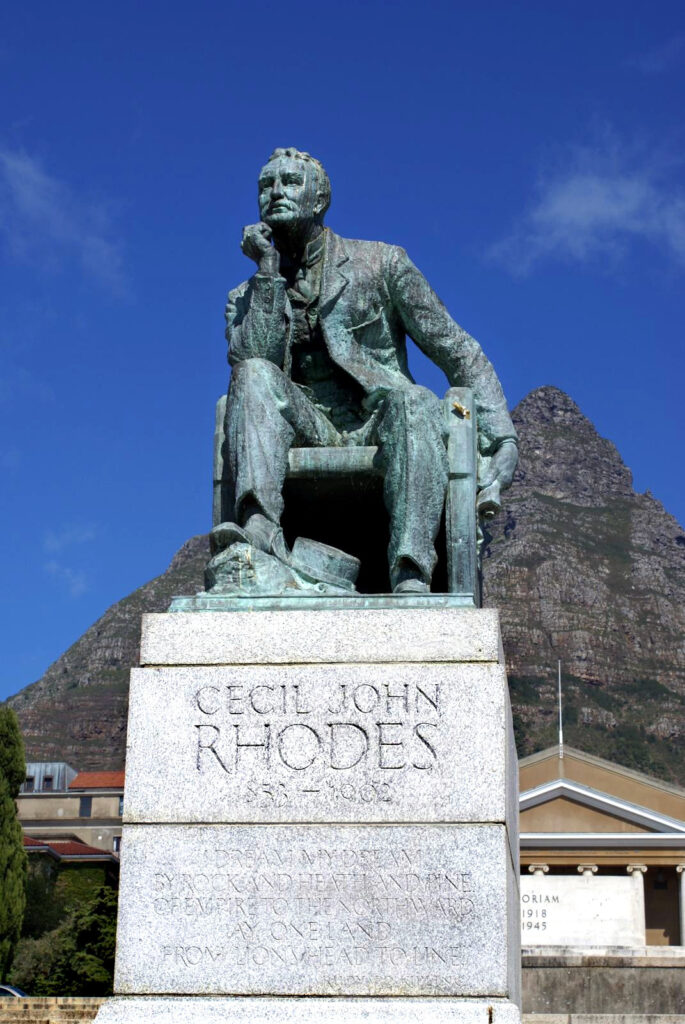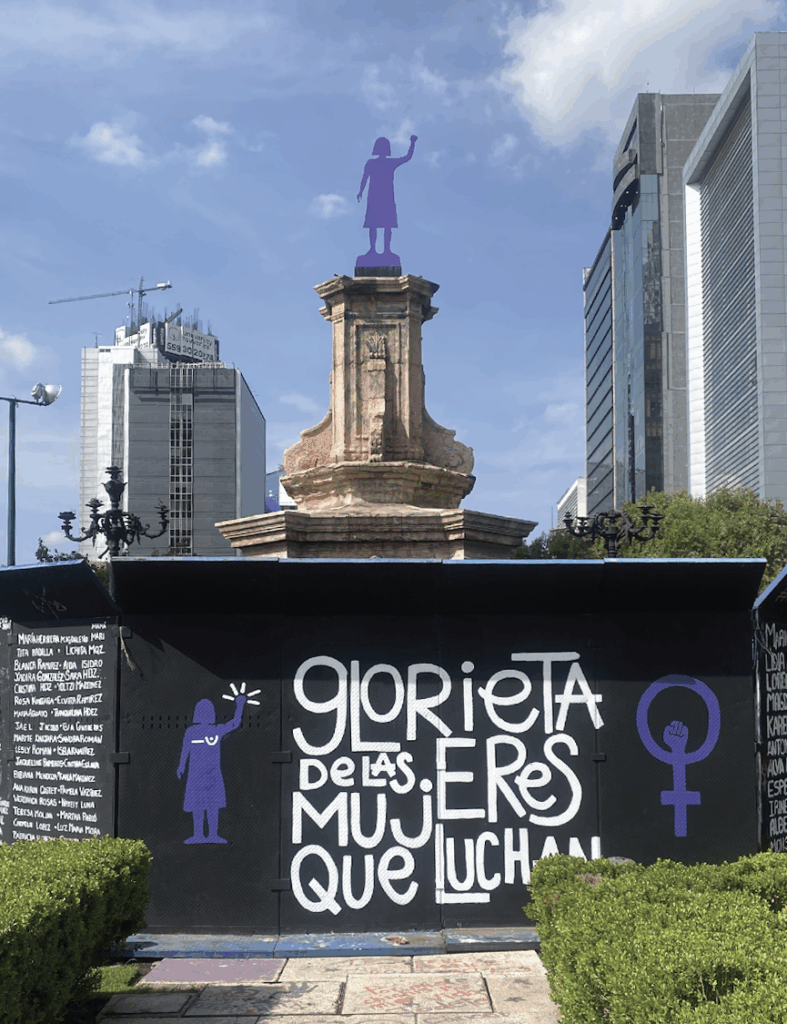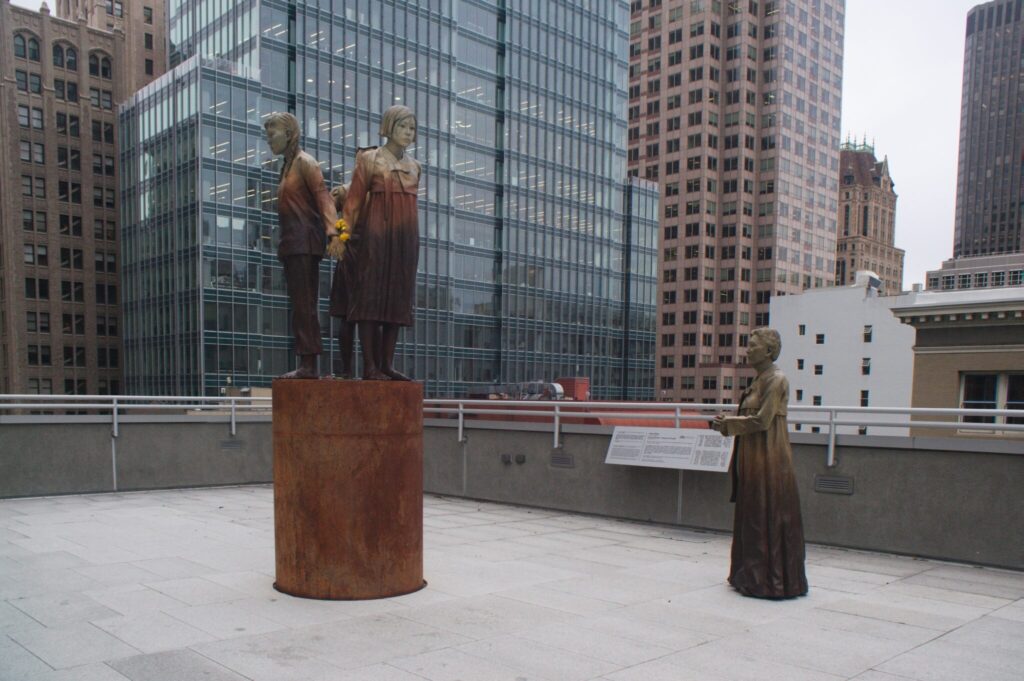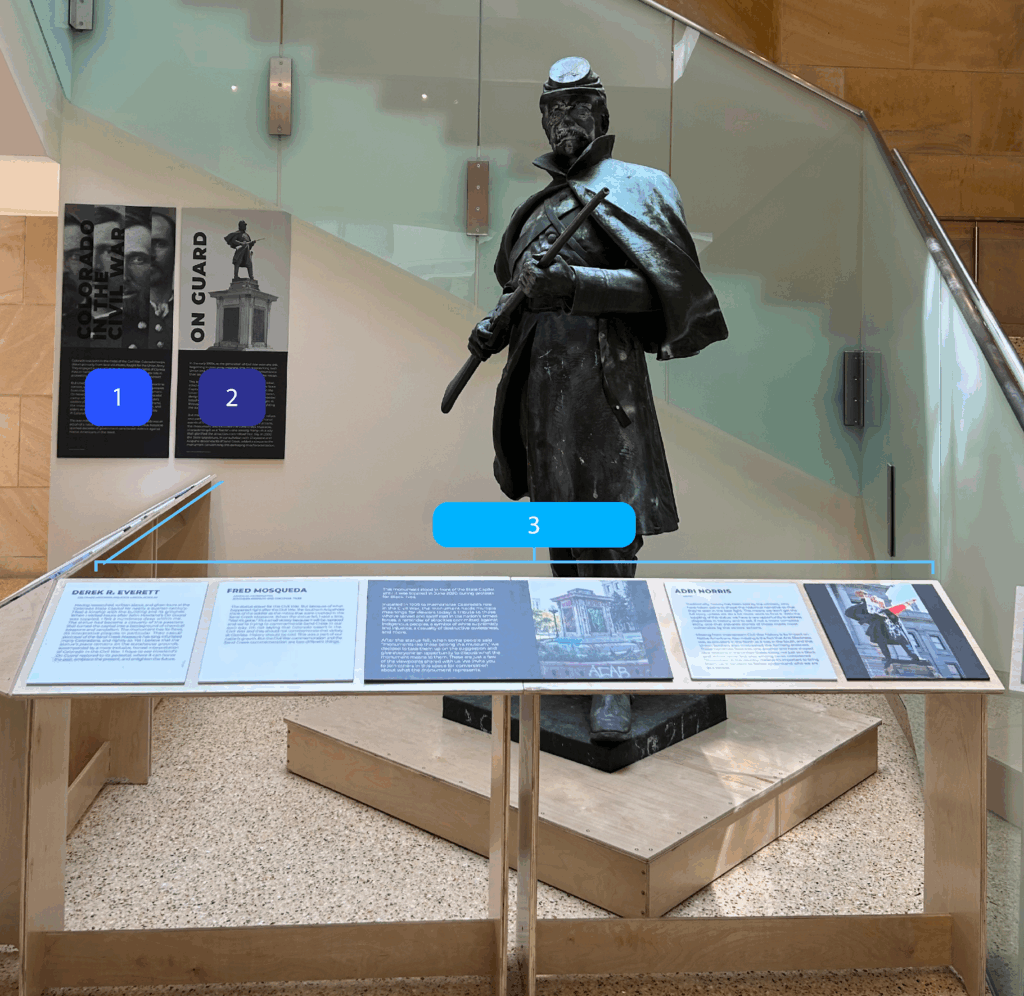
Monument of Upliftment Framework. Explore definitions here.
Acknowledgements
Thank you to Michael Johnson, Michael Phillips, and Marilu Knode for their feedback, suggestions, and words, which helped improve this report.
Introduction
In July 2024, a sculpture honoring lawyer, politician, jurist, and civil rights leader Vel Phillips was added to the grounds of the Wisconsin State Capitol in Madison, Wisconsin. The effort began in 2020 following Michael Johnson’s call for the construction and addition of a sculpture of Vel Phillips outside the Capitol building. Subsequently, the Vel Phillips Legacy Initiative Task Force was established to facilitate the monument’s production and installation. The Task Force selected artist Radcliffe Bailey to design the sculpture and raised the necessary funds for its creation. The monument was then donated to the state of Wisconsin. Throughout the process, the Task Force worked closely with the State Capitol Executive Residence Board (SCERB) in Madison. Vel Phillips’ expansive career and list of achievements speak to her monumental intelligence, skill, and strength. During her lifetime, Phillips was deeply connected to the Milwaukee community and her constituents. The sculpture is designed to reflect this engagement. The Monuments Toolkit spoke with Michael Johnson, Michael Phillips, and Marilu Knode to learn more about the Task Force’s work.
Section 1: Historical Background
1.1. Vel Phillips
Vel Phillips (1923-2018) was born Velvalea Hartence Rodgers in 1923. She grew up in Milwaukee, Wisconsin, in the Bronzeville neighborhood and attended North Division High School. When Phillips earned a full-ride scholarship to the institution of her choice, she chose Howard University in Washington, D.C. After graduation, Vel met her partner, Dale, in Milwaukee. Their son, Mike Phillips, described the pair as a dynamic duo who staunchly supported each other, personally and professionally, throughout their lives (personal interview 2026).
Following her undergraduate studies, Phillips attended the University of Wisconsin-Madison (UW-Madison) Law School with her husband, Dale Phillips. Phillips returned to Milwaukee with her partner to raise their family after graduating from law school. As a powerful Black woman, Phillips faced obstacles at the intersection of racism and sexism (Crenshaw 1989) throughout her career. Nonetheless, she spent decades as a successful politician, jurist, and civil rights leader. The legacy of Vel Phillips lives on in numerous boulevards, schools, scholarships, and awards named in her honor.
1.2. Phillips’ Career
Vel Phillips was a trailblazer. Her career saw many “firsts,” positions that often made her the only woman and/or the only Black person in the room. Phillips’ attributes, accomplishments, and efforts to improve the lives of Wisconsinites place her on the list of people who have made significant contributions to Wisconsin history. Her ability to do so as a Black woman in the 1950s and in the decades that followed makes her a particularly inspirational figure.
Phillips was the first Black woman to graduate from UW-Madison Law School and one of the few women in her 1951 graduating class. Phillips and her husband, Dale, returned to Milwaukee, where she became active in the League of Women Voters and the National Association for the Advancement of Colored People (NAACP). In 1956, Phillips ran for elected office on the Milwaukee Common Council at a time when few women did so. She changed her legal name from Velvalea to Vel R. Phillips to appear less feminine and intentionally omitted a photo from her campaign literature distributed in some Milwaukee areas (Silvers 2024). Phillips knew that her race and gender would overshadow her campaign promises in some parts of the city. Milwaukee’s Black community supported Vel Phillips in numerous ways throughout her early life and career. The Phillips family returned that support as thoughtful neighbors and strong community leaders (Mike Phillips, personal interview, 2026).
Phillips won the election and became the first woman and first Black person elected to the Milwaukee Common Council. At the time, “Milwaukee major media focused more on gender than race in coverage of her campaign and early career. She met both sexism and racism from aldermen but bided her time in her first term to build support beyond the city” (McBride n.d.).
As an alderwoman, Phillips sought to address housing discrimination in Milwaukee. Milwaukee was one of the most segregated cities in the nation in the 1950s and 1960s (Wisconsin Historical Society n.d.c.), and remains one of the top ten most segregated cities in the US (Othering & Belonging Institute 2021). Historical redlining practices and the denial of equal access to housing and loan opportunities due to systemic racism resulted in the concentration of Milwaukee’s Black population in the “Inner Core,” a near-north neighborhood of Milwaukee (Foltman and Jones 2019, Wisconsin Historical Society n.d.c.). The area was also known as Bronzeville, a name commonly given to neighborhoods in northern and Midwestern cities that housed and confined African American migrants from the South. Racial prejudice was rampant (City of Milwaukee n.d.a.). Black Milwaukeeans who sought to live outside certain neighborhoods were met with people who refused to rent or sell to them, white neighbors who refused to live next to them, and banks that refused to provide equal access to loan opportunities.
In 1962, Vel Phillips introduced the Phillips Housing Ordinance to the Milwaukee Common Council for the first time. The ordinance would end discrimination, whether formal or informal, in the rental and sale of housing in Milwaukee (Sanders 2024). Commonly referred to as an open housing ordinance, the effort would create a policy to outlaw housing discrimination in the city. The ordinance lacked support from the rest of the Council and was repeatedly defeated.
The fight for fair housing went to the streets for 200 consecutive days between August 1967 and March 1968. In a series of events collectively known as “March On, Milwaukee,” the Milwaukee Youth Council of the NAACP, Vel Phillips, and Father Groppi led supporters of fair housing in non-violent protests through the streets of Milwaukee. They were met with counter-protest groups made up of white Milwaukeeans yelling slurs and throwing objects at the marchers.
The Fair Housing Act of 1968 outlawed housing discrimination at the federal level. After this, Vel Phillips’ local housing ordinance was finally passed in Milwaukee. Phillips was considered a pillar in the nationwide fight for open housing and had garnered support from Dr. Martin Luther King Jr. and the NAACP for her efforts.
Beyond the fight against housing discrimination, Phillips also discussed the civil rights campaign of the 1960s and 70s with Dr. Martin Luther King Jr., as well as Presidents John F. Kennedy Jr. and Jimmy Carter. In this role, Phillips influenced the Democratic Party’s civil rights platform. In 1960, Philips became the first Black American elected to the National Committee of either major political party.
In 1971, Phillips left the Milwaukee Common Council and was appointed to Milwaukee County Circuit Court. She was the first woman judge in Milwaukee County and the first African American judge in the state of Wisconsin. Phillips was then elected Wisconsin Secretary of State in 1978. In this position, she was the first Black American and first woman elected to statewide office. In 2004, Phillips served as the honorary chair of Gwen Moore’s campaign in 2004. Moore became the first Black woman to serve Wisconsin in the US House of Representatives.
Section 2: The Monument at the Wisconsin State Capitol building (Madison, WI)
2.1. Creation of the Sculpture
The initiative began in the summer of 2020. In response to the murder of George Floyd, local youth and activists led demonstrations in downtown Madison, Wisconsin, at and around the state capitol building. Two statues on the state capitol building grounds were damaged by protestors: the Forward statue and the statue of Christian Heg. Both have since been restored and returned to their place.
Michael Johnson, the President and CEO of the Boys and Girls Clubs of Dane County, led several events aimed at bringing law enforcement officials, young people, and communities of color together to discuss what had happened in Minneapolis (personal interview 2026). Johnson called for and organized town hall meetings to establish an open dialogue between police leadership and community members. In addition, he raised money to help repair the glass of local businesses damaged during demonstrations and gathered volunteers to clean up the area. Johnson sought to support the small businesses that had recently partnered with the Boys and Girls Clubs of Dane County to feed families during the onset and peak of the COVID-19 pandemic (personal interview 2026).
The activists called upon Johnson to join them at the state capitol building and speak. In conversations with demonstrators, Johnson was told that there was no representation of the Black community at the Wisconsin state capitol. This was one of many reasons activists were demonstrating at the Capitol building. Michael Johnson called the Office of Governor Tony Evers to investigate this statement, and he was informed that it was true. This was the beginning of the effort to erect a sculpture of Vel Phillips at the Capitol.
According to Michael Johnson, he immediately thought of Vel Phillips as a Wisconsin leader deserving of the honor (personal interview 2026). Through discussions with people across the state about who should be chosen for the monument campaign, Johnson received support and encouragement that his idea featuring Vel Phillips would succeed. After finalizing this decision, Johnson wrote letters to the State Capitol Executive Residence Board (SCERB), the Wisconsin Legislature, and Governor Tony Evers. The SCERB is the body that directly oversees work, such as the addition of monuments, on Capitol grounds. The open letter to Wisconsin State Senator and SCERB member Fred Risser was sent on June 29, 2020. It was submitted in conjunction with a petition that received over 3,000 signatures. Johnson’s (2020) letter stated:
“I am recommending that you consider constructing a statue of Vel Phillips which could be prominently displayed outside of the Capitol. I was informed by a group of young people and Capitol staff that there are no prominent pieces of art that reflect the contributions of African Americans in the Capitol building. African Americans have provided leadership in our state for more than 150 years and it’s time to ensure the Capitol celebrates that leadership and display the diversity that our state has to offer… [Mrs. Phillips] was intelligent, courageous, bold, fearless and worked with legislators and community organizers to pass ordinances and legislation that would improve the lives of Wisconsinites during very difficult times. With the recent civil unrest that is happening in Wisconsin, and across the country, I’m encouraging you to honor her legacy by approving a statue to be placed at the Capitol building, thus recognizing her contributions as a representative of the African American community. The young people of Wisconsin and generations thereafter need to see that representation matters and they need to see heroes and leaders that reflect the ecosystem of our communities at large…”
The Vel Phillips Legacy Task Force was formed in 2020 and co-led by Boys and Girls Clubs of Dane County Chairman appointee Dave Endres, Michael Johnson, and Michael Phillips, Vel’s son. One of the effort’s first hurdles, according to Johnson, was working around a long-standing policy that prevented adding anything new to the grounds of the Capitol building (personal interview 2026). There was a suggestion to add a bust of Vel Phillips inside the building, but that would make the monument less visible and less accessible. Ultimately, SCERB approved the addition of the Vel Phillips sculpture outdoors as an exception to the policy.
Despite the history of intense partisanship in the city of Madison, the Vel Phillips monument initiative received bipartisan support from SCERB and the state legislature. This success was due in part to communication between Task Force leaders and members of these bodies. Both Michael Johnson and Michael Phillips pursued conversations with members on both sides of the aisle who ultimately agreed to support the initiative and its mission (personal interviews 2026). These conversations were key to ensuring the effort moved forward with minimal obstacles.
There was also no public opposition to the addition of a sculpture of Vel Phillips to the state capitol grounds. Michael Phillips and Michael Johnson worked to engage the media through interviews, social media posts, and public appearances. This helped garner support for the initiative across the state (personal interviews 2026). It also aided fundraising efforts, which were key as the Task Force had decided to privately fund the monument and then donate the work to the state of Wisconsin. The choice to privately fund the effort allowed for greater control over artistic decisions and the ability to skip the arduous Request for Proposals (RFP) process. Ultimately, the SCERB and relevant subcommittee were responsible for assessing and approving the Task Force’s proposals.
To fundraise most effectively, the effort required non-profit status. The initiative was subsumed under the non-profit status of the Boys and Girls Clubs of Dane County with the board’s approval. According to Michael Phillips, undergoing this route was significantly easier than creating a non-profit entity from scratch, and gaining non-profit status allowed the Task Force fundraising team to expand into new and larger audiences, such as the Greater Milwaukee Foundation (personal interview 2026). Additional larger foundations, such as the Madison Community Foundation and the Rennebohm Foundation, were also engaged early in the process. From there, donations came in from all over the state and at all scales. Fundraising money was received from children’s lemonade stands, sororities and fraternities, and individual community members (Michael Johnson, personal interview 2026). Some key state organizations, such as the Milwaukee Bucks, were also contributors. In addition to the Madison-based fundraising effort, a second campaign was launched to engage the Milwaukee funding community, which claimed Vel Phillips as its own. Joining the Task Force were Cory Ampe, who helped raise the project’s profile through her marketing expertise, and Brad Pruitt, Interim Executive Director of America’s Black Holocaust Museum, who helped guide fundraising outreach and enabled the Task Force to hold an event at the Museum. Ultimately, the Task Force raised nearly $ 800,000 through a multi-pronged, collaborative fundraising approach.
According to Michael Phillips, the Vel Phillips Legacy Task Force was successful in part because of the strength of the team (personal interview 2026). Community leaders with expertise in marketing, finance, fundraising, and art generously agreed to volunteer to support the monument initiative. Michael Phillips felt strongly about establishing a knowledgeable art team to help ensure the sculpture’s artistic quality. In his search, someone connected Michael Phillips with Marilu Knode, a Milwaukee-based curator and arts administrator with extensive experience.
Under Knode’s leadership, the Task Force’s art committee was created to include arts leaders such as Sande Robinson (African American Art Alliance at the Milwaukee Art Museum), Polly Morris (Lynden Sculpture Garden), Dr. Kantara Souffrant (Milwaukee Art Museum), Dr. Amy Gilman (Chazen Museum of Art), and Ray Krueger (Michael Best & Friedrich LLP). The art committee was responsible for proposing and evaluating artists for the Vel Phillips sculpture commission. The final choice was artist Radcliffe Bailey, whose sculpture of W.E.B. Du Bois in downtown Milwaukee had previously caught Michael Phillips’s attention. Michael Phillips noted that establishing a contract with the sculpture artist, which laid out the timeline and accountability structure, was helpful in navigating this process (personal interview 2026).
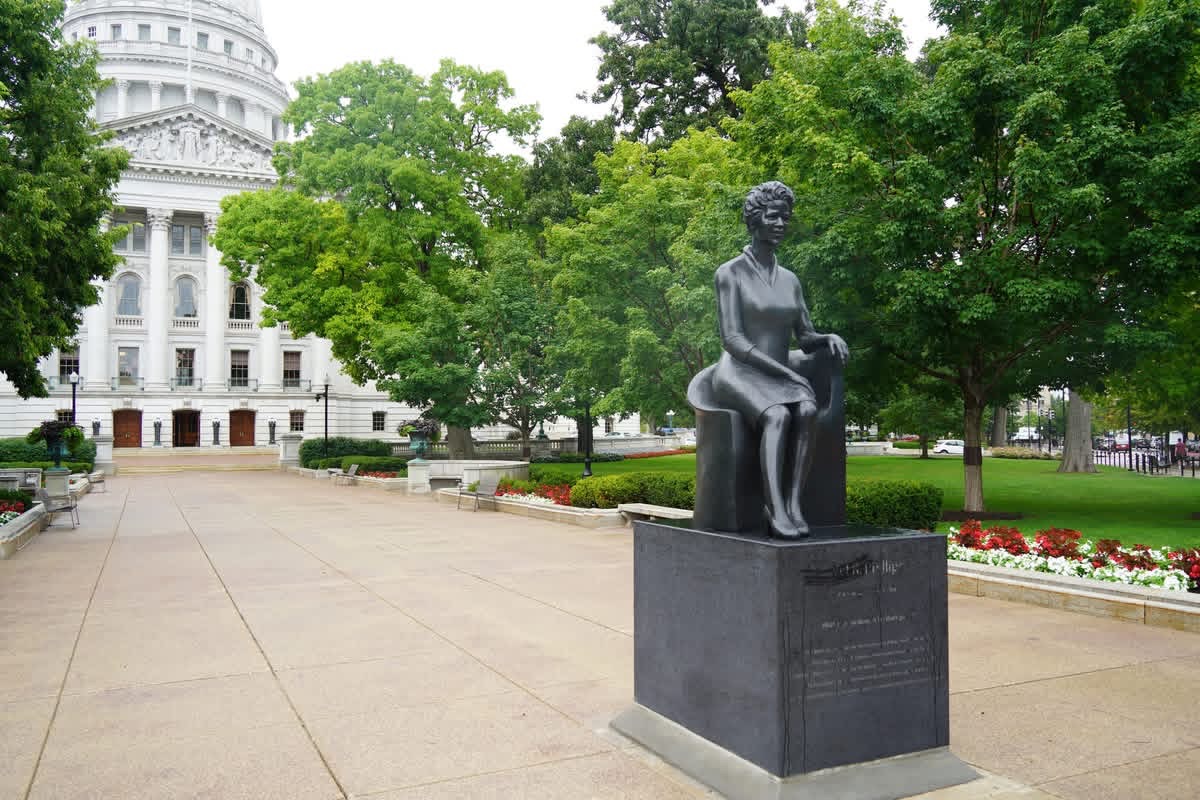
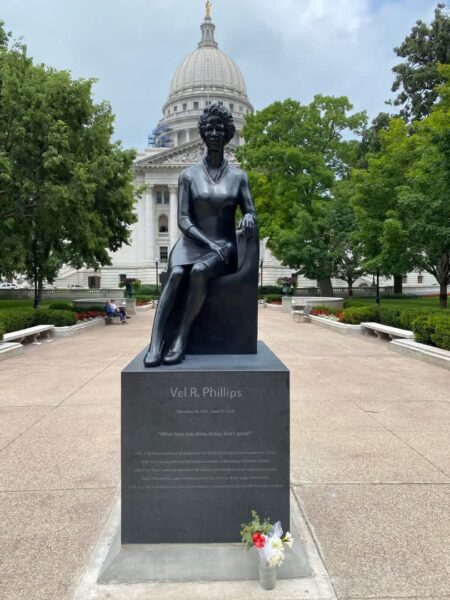
The bronze sculpture of Vel Phillips is slightly larger than 9 feet tall. Phillips is depicted seated with her legs to the side. One hand is resting on her thigh, and the other on the back of her seat. She looks ahead as if prepared to speak and address an audience. The pedestal is inscribed with her birth and death dates, a quote that states: “What have you done, today, that’s good?,” and a chronological list of 5 of her career “firsts.” The choice to portray her in a seated position was very intentional. Radcliffe Bailey, whose work was typically non-figurative, was intrigued by who Vel Phillips was and how she represented her community. His references included African sculpture, with a very modern patina, bypassing the more traditional surface treatments of bronze sculpture (Marilu Knode, personal communication, 2026). Marilu Knode shared that it was a reference to Phillips’ close relationship with her constituents, in which she was in their space, actively listening, and part and parcel of her community (personal interview, 2026). The depiction of Phillips was based on a 1956 photograph of her.
The sculpture was unveiled in July 2024 in a ceremony co-led by the Vel Phillips Legacy Initiative Task Force and the Boys & Girls Clubs of Dane County. Hundreds of people attended the ceremony, dressed in white in honor of the Boys & Girls Clubs’ annual All White celebration and fundraiser, which coincided with the sculpture’s unveiling. The collaborative effort that had facilitated the successful fundraising campaign also brought over 1,000 community members, donors, and government officials together for the historic day. It was a celebration of the legacy of Vel Phillips and the success of the monumental effort, started in 2020, to change the landscape of the Wisconsin state capitol building.
2.2. Symbolism
Michael Johnson shared that he has witnessed overwhelming community support and pride for the monument (personal interview 2026). The Vel Phillips sculpture is one of many commemorations of Phillips’ legacy, alongside Milwaukee’s Vel R. Phillips Plaza, Vel Phillips Avenue, and the effort to establish Vel Phillips Observance Day (February 18) for Wisconsin public schools. As Michael Phillips shared, efforts to commemorate his mother’s legacy are an “easy sell” in the sense that she is easy to respect, honor, and celebrate (personal interview 2026).
Alderwoman Milele Coggs led the effort to rename Milwaukee’s Fourth Street as Vel Phillips Avenue in 2018. In the near future, Milwaukee’s Vel R. Phillips Plaza will feature a public artwork designed to honor Phillips by Philadelphia-based artist Karyn Olivier. The work was commissioned under the leadership of Marilu Knode, who continues to support the celebration of Phillips’ legacy as the art project manager for the City of Milwaukee Vel R. Phillips Plaza Artist Commission. Across Wisconsin, community leaders are ensuring that Vel Phillips’ legacy is inscribed on the landscape.
Vel Phillips was a powerful politician, jurist, and civil rights leader. These accomplishments alone cement her legacy as an influential figure in Wisconsin history. Reaching her achievements as a Black woman in the 1950s-70s meant she was also carving out a path that was rarely traveled by those who weren’t white men. In the face of racism and sexism, Phillips fought tirelessly for what she believed in. Her legacy is such that the Milwaukee Common Council instated the Vel R. Phillips Trailblazer Award, which is awarded annually to “a female city resident who best exemplifies Vel R. Phillips’ legacy of selfless service and trailblazing work to improve the quality of life for residents in Milwaukee” (City of Milwaukee n.d.b.). Michael Phillips described the significance of the monument: “This sculpture is more than a monument to my mother’s legacy; it is a beacon of hope and a call to action…It serves as a potent reminder that we all can shatter barriers and champion the values she lived by” (Casey 2024).
Section 3: Framework
3.1. Monument of Upliftment
According to Michael Johnson, the Vel Phillips monument initiative began in response to the lack of representation of people of color in the monumental landscape at the Wisconsin State Capitol (personal interview 2026). At the national level, the Madison monument of Vel Phillips is the first outdoor sculpture of a Black woman on any US state capitol grounds. In addition, it is one of the relatively few monuments to real historical women in the United States. According to art historian Sierra Rooney (2022), only about 6% of monuments in the US take historical women as their subjects. There are more that feature allegorical women, such as female figures representing liberty or justice in human form. For example, the Forward monument that stood in front of the Wisconsin state capitol and was toppled in 2020 was a sculpture of an allegorical woman embodying Wisconsin’s state motto. Forward was placed at the Wisconsin state capitol in 1895. Over 125 years later, Forward is joined by a real trailblazer: Vel R. Phillips.
The sculpture of Vel Phillips honors the legacy of a politician who was deeply connected to her community and constituents and advocated fiercely on their behalf. It also foregrounds the stories of the Civil Rights Movement in Milwaukee, the city’s legacy of racism, the entry of women into Milwaukee politics, and the accompanying resistance. Though these stories are remembered, taught, and learned by many, they are often given lower priority than other elements of Wisconsin history. They are not the narratives that have historically been told through monuments.
At the unveiling ceremony, Wisconsin State Representative and member of the Vel Phillips Legacy Initiative Task Force Sheila Stubbs identified Phillips’ spirit as inspiration for contemporary movements, stating: “The task ahead of us is not easy, but as Ms. Phillips demonstrated, nothing worth doing is easy… In the words of Ms. Phillips’ mother, she said as a young girl, and I quote, ‘If you really want it, don’t dream small; dream big dreams’” (Dahmer 2024).
References
Boys & Girls Clubs of Dane County. n.d. “Vel Phillips Campaign.” Accessed September 20, 2025. https://www.bgcdc.org/velphillipscampaign.
Casey, Evan. 2024. “Vel Phillips statue to be first monument on state Capitol grounds to honor a Black leader.” Wisconsin Public Radio. July 26, 2024. https://www.wpr.org/news/vel-phillips-statue-to-be-first-monument-on-state-capitol-grounds-to-honor-ablack-leader.
Cheng, Mallory. 2024. “New historical markers commemorate Milwaukee’s fair housing marches.” Wisconsin Public Radio. March 4, 2024. https://www.wpr.org/news/new-historical-markers-commemorate-milwaukees-fair-housing-marches
Chappell, Robert. 2020. “Johnson calls for Vel Phillips statue outside Capitol.” Madison 365. June 30, 2020. https://madison365.com/johnson-calls-for-vel-phillips-statue-outside-capitol/.
City of Milwaukee. n.d.a.“Bronzeville: History.” Accessed September 20, 2025. https://city.milwaukee.gov/Bronzeville/History.
City of Milwaukee. n.d.b. “Common Council: Vel R. Phillips Trailblazer Award.” Accessed September 30, 2025. https://city.milwaukee.gov/CommonCouncil/AwardsContests/VelRPhillipsTrailblazerAward.
Cohen, Carol. 2015. “Vel Phillips: Making History in Milwaukee.” Wisconsin Magazine of History 99, no. 2 (2015): 42-29.
Crenshaw, Kimberlé. 1989. “Demarginalizing the Intersection of Race and Sex: A Black Feminist Critique of Antidiscrimination Doctrine, Feminist Theory and Antiracist Politics.” University of Chicago Legal Forum: Vol. 1989: Iss. 1, Article 8 (1989).
Dahmer, David. 2024. “‘What a historic day this is.’ New Vel Phillips statue becomes first outdoor sculpture of an African American woman on U.S. state capitol grounds.” Madison 365. July 29, 2024. https://madison365.com/what-a-historic-day-this-is-new-vel-phillips-statue-becomes-first-outdoor-sculpture-of-an-african-american-woman-on-u-s-state-capitol-grounds/
Early, Rosalind. 2015. “Vel Phillips Knocked Down Racial and Gender Barriers in Wisconsin.” Humanities 36, no. 4 (2015). https://www.neh.gov/humanities/2015/julyaugust/statement/vel-phillips-knocked-down-racial-and-gender-barriers-in-wiscons.
Evers, Tony. 2024. “Gov. Evers Announces Vel Phillips to Become First Black Leader to be Honored on Wisconsin State Capitol Grounds.” Press Release. April 12, 2024. https://content.govdelivery.com/accounts/WIGOV/bulletins/395ccb7.
Foltman, Leah and Malia Jones. 2019. “How Redlining Continues to Shape Racial Segregation in Milwaukee: 1930s Lending Map Reveals The Policy Roots of Housing Discrimination.” UW Applied Population Lab. February 28, 2019.
Frederick, Zanzi and Morgan King. 2025. “Wisconsin Legislative Black Caucus honors Vel Phillips’ legacy.” The Badger Herald. February 19, 2025. https://badgerherald.com/news/wisconsin/2025/02/19/wisconsin-legislative-black-caucus-honors-vel-phillips-legacy/
History Makers, The. n.d. “Vel Phillips.” The History Makers: The Digital Repository for the Black Experience. Accessed September 27, 2025. https://www.thehistorymakers.org/biography/vel-phillips-41.
Johnson, Michael. 2020. “Open Letter from Michael Johnson, President & CEO of Boys & Girls Clubs of Dane County, to the State Capitol Executive Residency Board Regarding Proposed Statue of Vel Phillips, the first African American to be elected in America to a Statewide Office.” Letter and Petition. June 29, 2020. https://www.change.org/p/fred-a-risser-add-a-capitol-statue-of-the-first-african-american-wi-secretary-of-state-vel-phillips.
Kitonga, Alexander. n.d. “Vel R. Phillips.” Milwaukee Bronzeville Histories. Accessed October 3, 2025. https://milwaukeebronzevillehistories.org/items/show/9.
Knisely, Sandra. 2014. “Vel Phillips LLB’51.” Wisconsin Alumni Association. March 5, 2014. https://www.uwalumni.com/news/daa_phillips/.
Kjeldsen, Vanessa. 2025. “Hundreds demonstrate at ‘Stand Up for Science’ rally at the Wisconsin State Capitol.” WSAW-TV. March 7, 2025. https://www.wsaw.com/2025/03/08/hundreds-demonstrate-stand-up-science-rally-wisconsin-state-capitol/.
Marquette University. n.d.“Honorary Degrees: Vel R. Phillips.” Accessed October 3, 2025. https://www.marquette.edu/university-honors/honorary-degrees/phillips.php
McBride, Genevieve. n.d. “Vel Phillips.” Encyclopedia of Milwaukee. Accessed September 27, 2025. https://emke.uwm.edu/entry/vel-phillips/.
Othering & Belonging Institute. 2021. “What the 2020 Census reveals about segregation.”
University of California, Berkeley. October 11, 2021. https://belonging.berkeley.edu/what-2020-census-reveals-about-segregation#:~:text=The%20top%2010%20most%20segregated%20cities%20in%20the%20country%20are,Louis
Parquette, Archer. 2023. “Why Vel Phillips Will Be Seated In Her Future State Capitol Statue.” Milwaukee Magazine. July 18, 2023. https://www.milwaukeemag.com/why-vel-r-phillips-will-be-seated-in-her-new-state-capitol-statue/
PBS Wisconsin. 2015. Vel Phillips: Dream Big Dreams. February 16, 2015. Documentary. https://www.pbs.org/video/wpt-documentaries-vel-phillips-dream-big-dreams/.
Rooney, Sierra. 2022. “Commemoration of an Epoch: Monuments to the Women’s Suffrage Movement in the United States.” Panorama l, no. g (2022). doi:10.24926/24716839.12556.
Sanders, Gabe. 2024. “How Black Milwaukeeans Won the Fight for Fair Housing.” University of Wisconsin-Madison: The Nonviolence Project. February 4, 2024. https://thenonviolenceproject.wisc.edu/2024/02/04/how-black-milwaukeeans-won-the-fight-for-fair-housing/.
Schulte, Laura. 2024. “’We’re making history’: Statue of Vel Phillips unveiled on Capitol square in Madison.” Milwaukee Journal Sentinel. July 27, 2024. https://www.jsonline.com/story/news/politics/2024/07/27/statue-of-vel-phillips-unveiled-on-capitol-square-in-madison/74535151007/
Silver, R. Amy. 2024. “Vel Phillips: A Woman Of Firsts In The Fight For Fairness, Justice And Equality.” Wisconsin Justice Initiative. October 12, 2024. https://www.wjiinc.org/blog/vel-phillips-a-woman-of-firsts-in-the-fight-for-fairness-justice-and-equality.
Smith, Kevin D. 2003. “From Socialism to Racism: The Politics of Class and Identity in Postwar Milwaukee.” Michigan Historical Review 29, no. 1 (2003): 71–95. https://doi.org/10.2307/20174004.
State Capitol and Executive Residence Board (SCERB). 2024.“Meeting Minutes.” April 12, 2024. Wisconsin Department of Administration.
University of Wisconsin-Milwaukee. n.d. “March on, Milwaukee: Phillips, Vel.” Accessed September 25, 2025. https://uwm.edu/marchonmilwaukee/keyterms/phillips-vel/
Wisconsin Historical Society. n.d.a. “Vel Phillips.” Accessed September 20, 2025. https://wisconsinhistory.org/Records/Article/CS14781.
Wisconsin Historical Society. n.d.b. “March On, Milwaukee.” Accessed September 20, 2025. https://wisconsinhistory.org/Records/Article/CS16479.
Wisconsin Historical Society. n.d.c. “Black History in Wisconsin.” Historical Essay. Accessed October 2, 2025. https://www.wisconsinhistory.org/Records/Article/CS502#rights.
Wisconsin Women Making History. n.d. “Vel Phillips.” University of Wisconsin Office of Gender & Women’s Studies (GWS). Accessed September 20, 2025. https://womeninwisconsin.org/profile/vel-phillips/.