 Credit: StockCake
By Gilbert C. Correa, World Heritage Nominations Initiative Director
In the heart of Mexico City, where deep history meets modern policy, a quiet but monumental effort is underway to unite the cultural and natural landscapes of the United States and Mexico. Recently, our team had the honor of meeting with officials at the headquarters of the National Institute of Anthropology and History (INAH) and National Commission of Natural Protected Areas (CONANP) to advance the World Heritage Nominations Initiative. These meetings were a crucial step toward recognizing the shared, inseparable heritage of the borderlands through UNESCO World Heritage inscriptions.
Why Binational Nominations?
The U.S.-Mexico border is often viewed through the lens of division, but the border region represents a unique cultural corridor and a fragile, shared ecosystem.
Conversations at INAH: Protecting Shared History
At the INAH headquarters, discussions focused on the intense, detailed work required to inscribe El Camino Real de Tierra Adentro as an extension to Mexico’s 2010 inscription. As the institution responsible for Mexico’s vast archaeological and historical heritage, INAH is vital to the success of these nominations.
Key takeaways:
Coordinated Documentation: Aligning the rigorous standards of INAH with US documentation efforts to create a unified dossier for UNESCO.
Cultural Continuity: Recognizing that the history of these sites spans far beyond the current border line, involving indigenous histories that connect both nations.
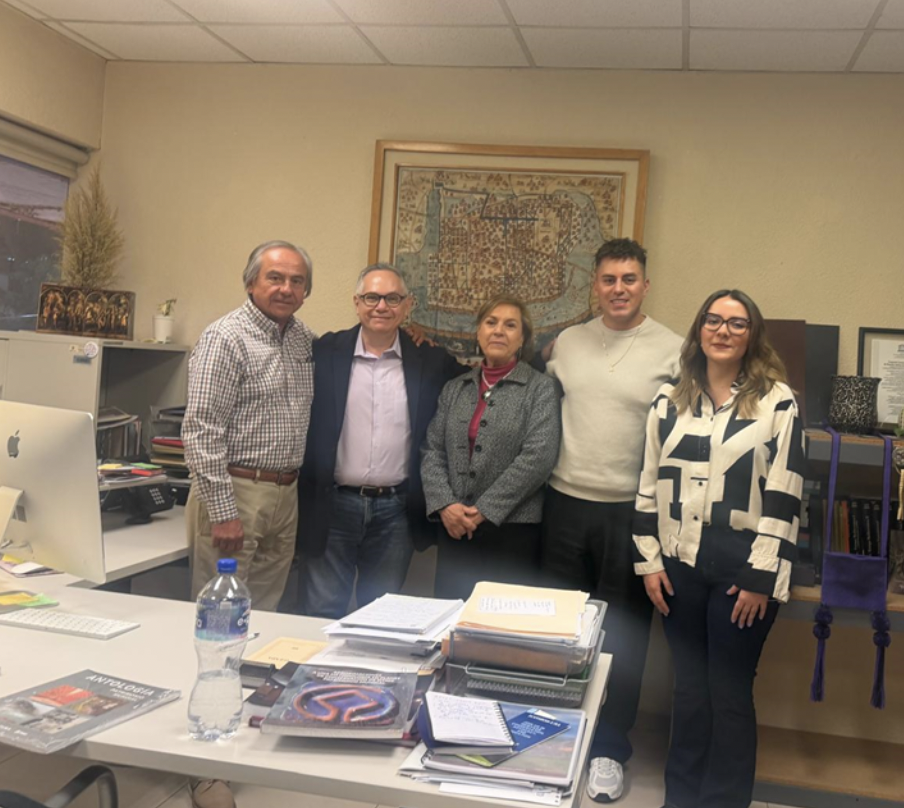
Left to right: Federico Godinez (Retired Director of El Pinacate), Francisco Vidargas (INAH World Heritage Director), Dr. Guadalupe Zepeda (ICOMOS-Mexico President), Gilbert Correa (World Heritage Nominations Director) and Carla Castro Díaz (Executive Assistant).
Conversations at CONANP: Protecting Shared Ecosystems
At CONANP, the focus shifted to the ecological integrity of the borderlands. El Pinacate y Gran Desierto de Altar Biosphere Reserve, a UNESCO site since 2013, faces challenges, specifically regarding border wall impact on wildlife migration such as the Sonoran pronghorn.
Key takeaways:
Ecological Connectivity: The need for both countries to manage these areas as a single, shared natural landscape.
Sustainable Management: Strengthening the role of protected areas in maintaining ecological services and supporting local communities.
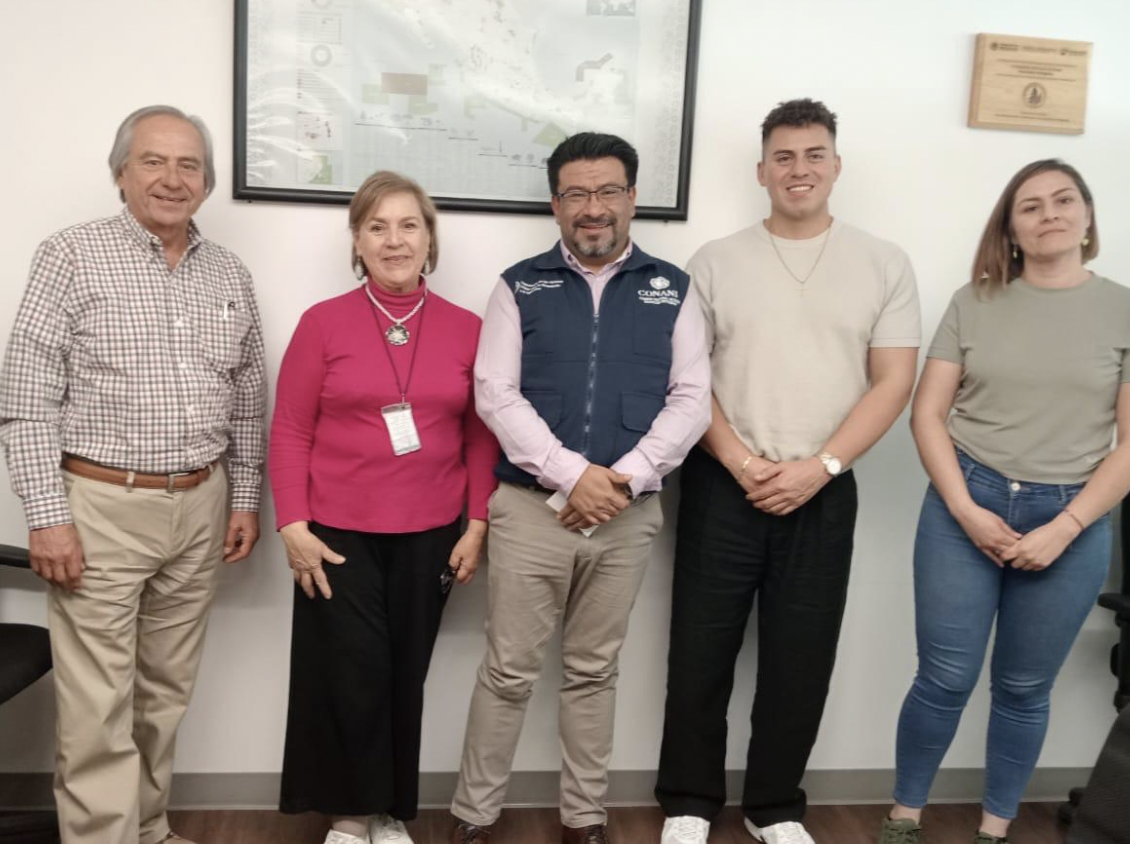
Left to right: Federico Godinez (Retired Director of El Pinacate), Dr. Guadalupe Zepeda (ICOMOS-Mexico President), Dr. Jose González (CONANP General Director of Institutional Development and International Affairs), Gilbert Correa (World Heritage Nominations Director) and Gina Castillo Picazo (CONANP Director).
The Path Forward
The journey to inscription is long and complex, but the commitment from officials at both INAH and CONANP reflects a shared desire for international cooperation. These meetings affirmed that, despite geopolitical challenges, the protection of shared heritage is a bridge that brings our nations closer together.